.png)


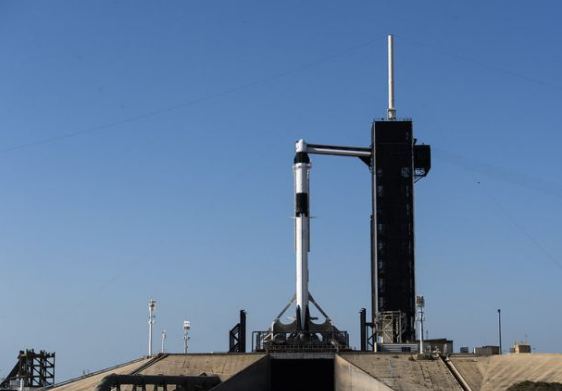
The stakes have never been higher for SpaceX, which is ready to turn into the main business spaceflight organization to dispatch NASA space explorers to space on Wednesday (May 27).
Not exclusively will SpaceX impact the world forever with its first space traveler dispatch, yet Wednesday's Demo-2 practice run will check the beginning of another period of human spaceflight in the United States, which hasn't propelled its own space explorers to circle since the space transport program finished in 2011.
"This is an extraordinary second where all of America can take a gander at our nation accomplish something staggering once more, and that is dispatch American space travelers on American rockets from American soil, and we will go to the International Space Station. What's more, what we do there, obviously, is we're changing how we do spaceflight when all is said in done," NASA executive Jim Bridenstine said in a question and answer session on Tuesday (May 26).
"The Commercial Crew Program is in reality about commercializing low Earth circle," Bridenstine said. "We have resupply, presently we will have team, before long we will have business space stations. Also, this is an interesting chance to unite all of America in one second in time and state take a gander at how brilliant what's to come is. That is the thing that this dispatch is about."
Propelling space explorers to the International Space Station is just the start of SpaceX's excellent designs for the fate of human spaceflight. SpaceX organizer Elon Musk has said that the organization means to in the end send individuals to the moon and Mars. Meanwhile, SpaceX will work to satisfy a $2.6 billion NASA agreement to dispatch six operational Crew Dragon missions to the space station after the Demo-2 practice run.
The California-based organization, which Musk established in 2002, left a mark on the world in 2012, when it turned into the principal privately owned business to dispatch a payload boat to the International Space Station. That uncrewed Dragon rocket was the first of 21 payload missions that SpaceX has propelled to the circling lab to date.
SpaceX was one of two organizations that NASA chose in 2008 to dispatch freight to the space station. NASA doled out $3.5 billion to SpaceX and Orbital ATK (which is currently Northrop Grumman Space Systems) to create and dispatch private load ships. In 2014, NASA declared that it had chosen SpaceX and Boeing to dispatch space travelers to the space station under a comparative agreement.
SpaceX's Crew Dragon vehicle is a variation of the payload transport, with less load space than its forerunner yet included life emotionally supportive networks, in addition to seven seats for space travelers to go in it. Both the team and load forms of SpaceX's Dragon vehicle are reusable, much the same as the organization's workhorse Falcon 9 rocket.
SpaceX impacted the world forever again in 2015 when it effectively took a Falcon 9 supporter back to Earth and stuck the main ever upstanding landing — an accomplishment no other organization or space office had endeavored previously. With its reusable rockets, team containers and load vessels, SpaceX is set for make space investigation increasingly maintainable and reasonable.
"Everything in our direction is towards that specific second — to dispatch individuals on a spaceship — and it's a tremendous advance," Hans Koenigsmann, VP of Build and Flight Reliability at SpaceX, said in a preparation after the dispatch status audit on Monday (May 25).
In the event that all works out as expected with the Demo-2 crucial, could be prepared to dispatch the principal operational Crew Dragon strategic Aug. 30, NASA manager Jim Bridenstine declared in a public interview at Kennedy Space Center on Tuesday (May 26).
The Demo-2 strategic SpaceX's first rodeo with a Crew Dragon shuttle at the International Space Station. In March 2019, SpaceX propelled a Crew Dragon with no space explorers ready for the shuttle's first practice run, called Demo-1.
While the Demo-1 strategic and from the circling lab went easily, the container detonated on a test remain at Cape Canaveral Air Force Station in Florida not long after its arrival. SpaceX authorities refered to an "oddity" during post-flight testing and opened an examination concerning the reason for the blast to ensure future Crew Dragon vehicles would be ok for space travelers.
Boeing likewise as of late finished an uncrewed dry run of its new space traveler taxi, called the CST-100 Starliner, however that strategic just a halfway achievement. The uncrewed Starliner rocket neglected to arrive at the space station after it propelled in December 2019, and it needed to come back to Earth early. An examination concerning what turned out badly with Starliner's flight uncovered various glitches and blunders, some of which were possibly disastrous, an autonomous survey board found.
In contrast to the freight missions or uncrewed practice runs, SpaceX is presently entrusted with securely dealing with the most valuable payload of every one of the: two human lives. With NASA space travelers Bob Behnken and Doug Hurley on board the Crew Dragon, the Demo-2 strategic SpaceX's push to show that its new rocket is a protected and solid methods for transportation for NASA space travelers, however for potential business spaceflight travelers also.
"This is a noteworthy achievement," NASA representative executive Jim Morhard said Tuesday at the question and answer session. "Previously, NASA created, planned, fabricated and afterward worked shuttle and rockets. This is the first occasion when that a business organization is building and going to work this rocket and container."
"We're truly seeming to be a client to SpaceX and different organizations later on. Furthermore, that is what we're attempting to do is to make and grow — truly extend the economy in low Earth circle," Morhard said. "That is truly what this is about tomorrow."

27/05/2020 09:08 am

-450px.png)
-450px.png)

-450px.png)

