.png)


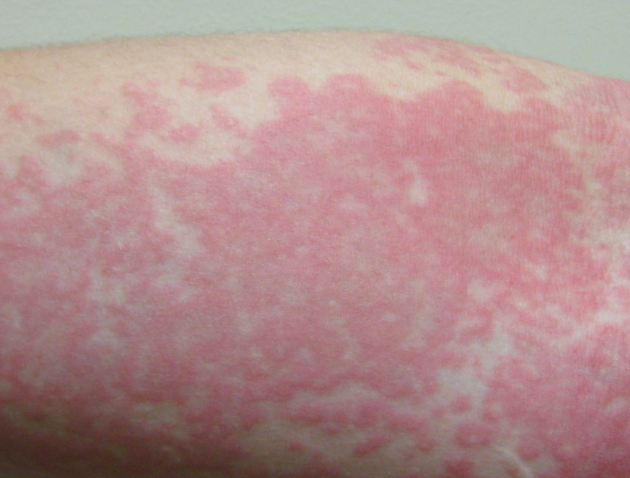
A skin rash can once in a while be the main indication of individuals contaminated with COVID-19, an investigation has finished up.
Three kinds of rashes are recognized in the examination by King's College London, driving those behind the investigation to call for skin rashes to be incorporated as a fourth key manifestation of COVID-19.
The three built up manifestations of COVID-19, as perceived by the NHS, are a high temperature, another and constant hack, and a misfortune or change to your feeling of smell or taste.
The investigation - which has been distributed on the web however has not yet been peer-assessed - drew upon information from the 336,000 standard UK clients of the COVID Symptom Study application.
With that information, specialists discovered 8.8% of individuals who tried positive for the infection endured a skin rash among their indications, contrasted and 5.4% of the individuals who tried negative.
Ad
Comparable outcomes were found in a further 8.2% of clients with a rash who didn't have a coronavirus test, yet at the same time revealed the three set up COVID-19 manifestations: a hack, fever or loss of smell.
To examine further, the analysts directed a different online review, which assembled pictures and data from almost 12,000 individuals with skin rashes and suspected or affirmed COVID-19.
They said a specific exertion was made to gather pictures from non-white individuals, who they said were "as of now underrepresented in dermatology assets".
Some 17% of respondents testing positive for coronavirus detailed a rash as the main side effect of the malady.
What's more, for one out of five individuals (21%) who announced a rash and were affirmed as being contaminated with coronavirus, the rash was their lone manifestation.
The examination said rashes related with COVID-19 fell into three classifications:
Hive-type rash (urticaria):
The abrupt appearance of raised knocks on the skin, which travel every which way rapidly over hours, and are typically irritated.
It can include any piece of the body, and regularly begins with extreme tingling of the palms or soles, and can cause expanding of the lips and eyelids.

These rashes can introduce very right off the bat in the contamination, however can likewise keep going quite a while a while later.
'Thorny warmth' or chickenpox-type rash:
Zones of little, irritated red knocks that can happen anyplace on the body, however especially the elbows and knees just as the rear of the hands and feet.
The rash can endure for quite a long time or weeks.
COVID fingers and toes (chilblains):
Rosy and purplish knocks on the fingers or toes, which might be sore however not generally irritated.
This sort of rash is generally explicit to COVID-19, is progressively normal in more youthful individuals with the infection, and will in general present later on.
The worldwide coronavirus contamination numbers continuously
Lead creator Dr Veronique Bataille, specialist dermatologist at St Thomas' Hospital and King's College London, stated: "Numerous viral contaminations can influence the skin, so it's not amazing that we are seeing these rashes in COVID-19.
"Notwithstanding, it's significant that individuals realize that sometimes, a rash might be the first or just side effect of the sickness.
"So on the off chance that you notice another rash, you should pay attention to it without anyone else confining and getting tried as quickly as time permits."
In spite of the fact that COVID-19 is frequently thought of as an infection that influences the respiratory framework, rashes had been accounted for in various cases among individuals in China and somewhere else in Europe who had required medical clinic treatment for extreme side effects of the ailment.
In any case, this is the first and biggest investigation to efficiently accumulate information about skin rashes in milder cases over the more extensive populace.
Expert dermatologist Dr Justine Kluk stated: "These discoveries feature the significance of watching out for any new changes in your skin, for example, protuberances, knocks or rashes.
"Early detailing of COVID-related rashes by individuals from people in general and acknowledgment of their noteworthiness by bleeding edge human services specialists -, for example, GPs, NHS 111 and emergency clinic staff - may build the identification of coronavirus contaminations and help to stop the spread."

15/07/2020 09:37 pm

-450px.png)
-450px.png)

-450px.png)

