.png)


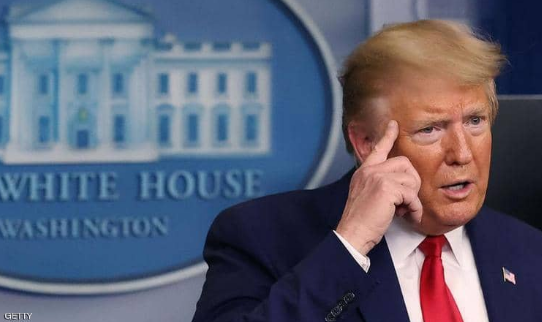
President Trump marked an official request Thursday planned for restricting the wide lawful insurances delighted in by online networking organizations, two days after he attacked Twitter for actuality checking two of his tweets.
"We're here today to guard free discourse from perhaps the gravest peril it has looked in American history, honestly," Trump said from the Oval Office. "A little bunch of amazing web based life syndications control the immense bit of all private and open correspondences in the United States."
The president said the tech organizations have "unchecked capacity to blue pencil, limit, alter, shape, stow away, modify" a huge circle of human association. "They have perspectives," he said.
The Trump organization trusts the request will in the long run set up for new guidelines on tech stages, for example, Twitter and Facebook.
In any case, lawful specialists said they were dicey the move would have any handy impact on the tech goliaths. Lawful spectators depicted the activity as "political theater," contending that the request doesn't change existing government law and will make little difference to administrative courts.
Twitter, in an announcement, called Trump's organization "a politicized way to deal with a milestone law," saying endeavors to dissolve the decades-old lawful insusceptibility may "compromise the eventual fate of online discourse and Internet opportunities."
The president's most recent encounter with Twitter was set off after the tech organization put reality checking admonitions on two of his tweets that guaranteed, without proof, that throwing voting forms via mail takes into account voter extortion. Both Democratic and Republican states have utilized democratic via mail for a considerable length of time without reports of boundless misrepresentation.
Trump lashed out at Twitter, contrasting the reality checking names with oversight and blaming the internet based life mammoth for smothering traditionalist voices, however the president didn't give any guides to back up his attestation.
The president, who frequently utilizes Twitter as a bull horn to tout his triumphs and shoot his faultfinders to his in excess of 80 million adherents, said Thursday that in the event that he had the lawful power to do as such, he would totally close down Twitter.
"I think I'd hurt it gravely on the off chance that we didn't utilize it any longer," Trump said from the White House. "We have different destinations we can utilize, I surmise, or we'd need to create different locales."
Twitter, in an announcement, lawful insusceptibility may "undermine the eventual fate of online discourse and Internet opportunities."
Twitter CEO Jack Dorsey said Wednesday that the stage will keep on notice clients about authentic twists on it.
"This doesn't make us a 'judge of truth,' " Dorsey composed on Twitter. "We will probably draw an obvious conclusion of clashing proclamations and show the data in contest so individuals can decide for themselves. More straightforwardness from us is basic so people can plainly observe the why behind our activities."
Dorsey's remark was a clear reaction to Facebook CEO Mark Zuckerberg, who revealed to Fox News before Wednesday that online networking organizations should avoid the matter of saying something regarding what is valid or not.
"Privately owned businesses likely shouldn't be, particularly these stage organizations, shouldn't be in the situation of doing that," Zuckerberg said.
A Facebook representative included that consummation the risk shield for internet based life organizations would make destinations liable for what billions of clients around the globe state.
"This would punish organizations that decide to permit questionable discourse and urge stages to control whatever may annoy anybody," representative Andy Stone said Thursday.
Controller: Turning the FCC into "the President's discourse police isn't the appropriate response"
The White House request trains in on a 1996 law passed by Congress that has regularly been at the focal point of political battles about directing discourse via web-based networking media stages: Section 230 of the Communications Decency Act.
The law shields Internet organizations from being sued over substance that shows up on their foundation and takes into consideration content balance. The evacuation of a post is surrendered over to the inner principles of organizations, for example, Twitter and Facebook, gave those choices are made "in compliance with common decency."

Courts have over and again maintained the law for innovation organizations, in any event, when the resolution was utilized to shield sites promoting kids who were constrained into sex dealing. (In 2018, Congress altered Section 230 to consider sites legitimately liable for advancing prostitution or survivors of sex dealing.)
Trump's structure looks to work on the immense legitimate security Silicon Valley has since a long time ago battled to save by offering another understanding of the law. The request contends, basically, that if the web based life organizations confine certain voices on their foundation, the organizations ought to be deprived of their lawful resistance, making the ways for an influx of claims over substance seen as disparaging.
Legitimate specialists welcomed the request with substantial doubt, saying, missing another law passed by Congress, it would not be lawfully authoritative.
"It goes against 25 years of legal point of reference, that has been government point of reference in pretty much every circuit court," said Kate Klonick, an educator at St. John's University School of Law in New York. "It's not the job of the president to decipher government law."
The request was "an extremely, away from of political theater," Klonick told NPR, including that the activity is "probably not going to have any sort of weight or authority."
The request guides the Federal Communications Commission to begin a standard creation procedure to explain when web-based social networking organizations should hold insurances under the law.
Tallness Capital Markets experts Chase White and Clayton Allen portrayed the official request as "generally commotion with no teeth."
In a note to financial specialists, they composed that the FCC just applies restricted power over web based life organizations, which are not controlled like customary telecasters. What's more, generally, the FCC has been against internet based life guideline, White and Allen brought up.
Effectively, a portion of the five individuals from FCC are communicating worry about the White House's activity.
"There's this immense shrubbery of First Amendment gives that it hauls the office into," Democratic Commissioner Jessica Rosenworcel told NPR. "Boss among them is the administration managing discourse, directing what can and can't be said on the web." She cautioned the request tried to transform the office into "the president's discourse police."
Lawyer General William Barr said the White House intends to push enactment to Congress that would try to reconsider Section 230 to balance the broad securities allowed to huge innovation organizations.
"It's been extended," said Barr, remaining close to Trump in the Oval Office. "What's more, I don't know about anybody on Capitol Hill who doesn't concur that it has been extended past its unique goal."
Advocates of Section 230 state both web based life stages and destinations like Wikipedia and the Internet Archive would not have the option to exist similarly without the law. In the event that the destinations were answerable for everything clients posted, the expense of protecting against a downpour of claims could demonstrate devastating, backers of the law contend.
Kate Ruane, senior administrative guidance for the American Civil Liberties Union, considered the request an endeavor to rebuff online life organizations for posts that disappoint the president.
"Unexpectedly, Donald Trump is a major recipient of Section 230," Ruane said. "On the off chance that stages were not safe under the law, at that point they would not chance the lawful risk that could accompany facilitating Donald Trump's untruths, maligning and dangers."
GOP's Hawley: Companies that demonstration like distributers ought to be treated as ones
Benefactors of Trump's organization, for example, Sen. Josh Hawley, R-Mo., said adding cautioning marks to the president's tweets is an article choice that shows the web based life stage is acting increasingly like a distributer and that the organization ought to lose its unique security.
"It looks bad to treat organizations that distribute their publication remarks about others' substance as though they are insignificant merchants. Organizations that demonstration like distributers ought to be dealt with like distributers," Hawley wrote in a letter to Twitter's Dorsey.
House Speaker Nancy Pelosi, D-Calif., underpins Twitter's drive to hail tweets that contain deceptions. She said Trump's organization guides the government to "destroy endeavors to assist clients with recognizing actuality from fiction."
She said the request doesn't address the multiplication of disinformation via web-based networking media, an issue focal in the 2016 presidential political race and one that is required to be powerful in November.
"Over and over, web based life stages have sold out the open enthusiasm to cushion their corporate benefits. Their plan of action is to bring in cash to the detriment of reality," Pelosi said.

29/05/2020 12:17 pm

-450px.png)
-450px.png)

-450px.png)

