.png)


As more individuals spend their twenties forming into who they need to turn out to be as opposed to settling down and focusing on their present personality, more TV shows are concentrating on that all-inclusive development period between adolescent imprudence and grown-up obligations. From "Young ladies" to "Superstore," and "That is no joke" to "New Girl," a lot of comedies have mined the unbalanced and energizing time when individual choices accompany additional weight, regardless of whether it's from guardians fretful to see youngsters emulate their example, the overwhelming requests of cultural norms, or an inner want to simply hustle just a bit and make sense of your life as of now.
Watchers wouldn't be accused for yelling that at select 20-something TV characters, given what number of shows have handled this present day "captured improvement" (and what number of have done it severely). In any case, in its first season, "Ramy" found numerous approaches to spruce things up. Confining the eponymous character's mission for self-satisfaction around an emergency of confidence included a charming new level; that his wayward excursion was welcomed on by how well the child of Egyptian settlers has acclimatized to American culture just developed our association with Ramy — the push and pull he feels is both recognizable and explicit. Be that as it may, even in this first season, when we were first becoming more acquainted with the horny little visionary, Youssef wisely extended the show's concentration past his primary character to incorporate scenes told from his mom and sister's points of view.
Season 2 sees further development, as Ramy continues committing errors. With phenomenal pacing, strong structure, and a sharp comical inclination, "Ramy" finds the sort of enthusiastic assuredness its fundamental character hungers for. It's a more astute, better show for being so difficult on Ramy, to a limited extent since it realizes him all around ok to not let the entire story lay on one youthful millennial's shoulders.
All things considered, Ramy makes for a perfect hopping off point. It enables this New Jersey to kid is far expelled from the Garden State's preferred TV child, Tony Soprano; Ramy is a dynamic, youthful, Egyptian-American who's mission for satisfaction isn't through treatment, however Allah. Hulu's first season saw Ramy attempting to accommodate strict conventions of a more established Muslim age with the acknowledged traditions of today; he attempted to associate with ladies, his companions, and his family without deceiving either his confidence or his own wants.
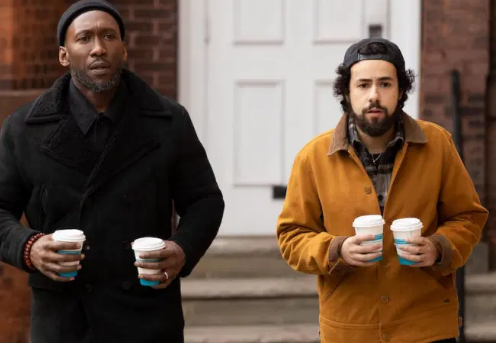
That contention arrived at an emergency in the finale, when Ramy headed out to Cairo to visit his granddad, before attaching with his cousin, Amani (Rosaline Elbay). As Season 2 beginnings, Ramy is in all out atonement mode. He's destroyed over his adoration life (or scarcity in that department), his pornography enslavement, and his uncontrolled, purposeless state. In this way, similar to a lot of tired and aimless youth before him, Ramy submits and submits hard: to Sheik Ali Malik, played by double cross Oscar victor Mahershala Ali. The Sheik is a Sufi head who runs a mosque like the one Ramy visited in Egypt with Amani: a little gathering gets progressively individualized consideration and are considered more responsible for their conduct than the socially traditionalist mosque Ramy used to visit. The Sheik has just enrolled a reliable after worked off his "cool" notoriety, to some extent as a result of his knowledge, beguile, and that additional restrictiveness.
Ramy figures out how to win the Malik's kindness and starts following his lessons to a "T." He begins supplicating before family supper, checking his eating routine, and holding an exacting report plan. In any case, in the same way as other guileless, overenthusiastic followers, Ramy can be a piece too anxious to even think about pleasing his new guide. Without ruining any of the early occasions, the Sheik is before long tried by Ramy as much as Ramy is tried by the Sheik, and as they arrive at a junction, Youssef begins investigating different characters.
About portion of the 10-scene second season is told from a point of view that is not Ramy's. His sister Dena (May Calamawy) assumes control over Episode 5, inspecting the sensitive harmony among pride and modesty that isolates ages; his dad, Farouk (Amr Waked) makes a convincing lead in Episode 8, which puts an intriguing turn on how guardians can be both baffled by and value their kids' stagnation; Uncle Naseem (Laith Nakli) stays an amazing Episode 9, however his sister (and Ramy's mother) Maysa (Hiam Abbass) wins the prize for top independent scene. What ought to be a "softball" last advance to citizenship gets confounded by preference and uneasiness, and Maysa's performance venture turns into an influencing demonstration of both receptiveness and flexibility, with Abbass giving another sure, charming turn.
Every one of these half-hour redirections from Ramy's excursion both add to our comprehension of his character and the more extensive story the arrangement endeavors to tell; regardless of its title's particular subject, "Ramy" needs to inspect how confidence impacts everybody. What Dena faces as a rehearsing Muslim lady isn't equivalent to Ramy, or even their raunchy Uncle Naseem, and Youssef (who composes or co-composes each scene) doesn't let Ramy impede their accounts. Indeed, even a scene that apparently lines Ramy winds up with additional to state about his companion, (Steve Way). As Ramy gets increasingly more enveloped with his confidence, the Sheik, and a growing sentiment, Steve feels increasingly more isolated from his companion — which is definitely not a remote feeling for a wheelchair-bound youngster with solid dystrophy. To Steve, confidence is an obstruction to an all the more satisfying life, not a pathway to one. The manner by which Youssef communicates their reconnection is somewhat extreme, yet it despite everything speaks to Steve's existence in appropriately undaunted way. This isn't about Ramy, it's about Steve, and the story stays by him, in any event, when it's troublesome.
When Season 2 wraps, it is anything but difficult to contend that Ramy hasn't grown up a lot, if by any means. Some may consider that to be a slight, however it's actually a benefit. Ramy is attempting. He's investing the exertion. He might be thrashing and missing the mark, however the exertion makes him charming. Such a large number of arrangement are content with watching lost characters commit errors just in light of the fact that they're lost; "Ramy" outlines the allurements and traps confronting its fundamental character with enough setting to settle on every decision reasonable. Additionally, before Ramy's conduct gets dreary or overindulgent, Youssef shifts the story to new characters who can convey too much of the sensational weight.
"Ramy" isn't generally such intrigued by disquietude; it's keen intentionally, regardless of who needs it or where it originates from. Join that with incredible exhibitions, including an instructing and unobtrusively silly abandon Ali (who has consistently realized how to infuse extremely, amusing minutes into his jobs), and Season 2 abstains from epitomizing its fundamental character's befuddlement. "Ramy" may concentrate on captured improvement, however it never lets itself get bolted up.

30/05/2020 06:28 pm

-450px.png)
-450px.png)

-450px.png)

